What is an activity?
In the Molecular Workbench, a learning activity (or in short, an activity) is an entire package of lesson that teaches students certain concepts through manipulable simulations embedded in instructional materials.
An activity can be as simple as a simulation with a user interface for observation and experimentation, or as complicated as an interactive textbook that provides comprehensive coverage of content, demonstration, discovery, coaching, reflections, and assessments. Different types of activities are needed for different students and different teaching strategies. The Molecular Workbench is a flexible system that supports all of them, and its authoring system supports the creation of all of them.
What's more, an activity can monitor what students are doing. Student data and reports can be fed back to teachers for them to track the learning progressions.
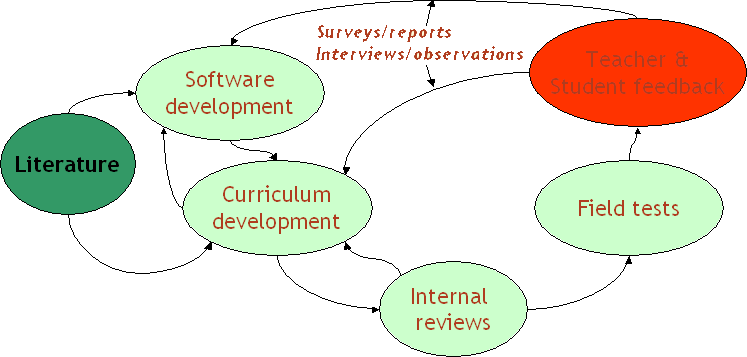
A well-designed activity usually goes through a complicated development cycle that involves software developers, curriculum developers, educational researchers, students, and teachers. Such an activity may be revised several times according to the feedback from students and teachers in field tests. The following image illustrates this process:
Built on a solid foundation of scientific and educational research, the Molecular Workbench presents a powerful tool for "making computers teach". Start exploring it today and taking advantage of this advanced technology in your teaching!